

Every startup marketing message, no matter how dressed up, collapses into a primitive message:
“Stop doing X. Start doing Y.”
Old behavior → new behavior. Old tool → new tool. Old story → new story.
Ramp nails it: “Stop dealing with receipts. Let software do it.”
It’s primal. Directional. Binary.
And when strong products fail to grow, it’s almost always because the founder never defines the X they’re eliminating.
Marketing is storytelling. Storytelling is tribal.
And tribal logic is brutally simple:
There is a villain.
The hero (you) fight them.
The hero wins.
If you refuse to name the villain, the narrative collapses.
No villain → no story.
No story → no attention.
No attention → no growth.
This is the silent failure for first-time founders with no GTM instinct:
They try to “market” without declaring an enemy.
But marketing without a villain is just decorative writing.
Attention comes from tension.
Tension comes from conflict.
Conflict requires a target.
As a startup, you must be comfortable making enemies.
The 5 Ways Your Customer Solves Their Problem Today
Every market sorts itself into the same predictable ladder:
Early-Stage Startups
Scrappy wedges. Cheap. Rough edges.
Mid-Stage Startups
Feature-rich. Fast-moving. Clean UI.
Late-Stage Startups
Well-Funded. Dominant. Polished.
Legacy Incumbents
Ancient. Bureaucratic. Expensive.
Manual Processes
Spreadsheets. Copy/paste chaos. Email chains.
This pattern repeats across verticals:
HR Software
Manual: Payroll from spreadsheets and ACH transfers
Customer Support Software
Manual: Email, phone calls, and spreadsheets.
The 3 Rules of Startup Marketing
Now, if you want to be successful in startup marketing there are only three core rules:
Rule #1: Never punch down.
Attacking anyone below your weight class signals insecurity.
There is no upside, and punching down only makes you look like a bully.
Rule #2: People on your level are for collaborating or ignoring.
When you’re small → collab sideways.
Data drops, shared content, cross-distribution.
Once you grow → ignore sideways.
Your brand becomes gravitational; collaboration ROI decays.
Rule #3: Always punch up.
This is where asymmetric marketing lives, by stealing attention from giants.
When punching up you need to expose the weaknesses of giants, namely how they are:
Slow.
Bloated.
Expensive.
When you attack a giant there are two possible outcomes:
a. The giant ignores you.
Great. Your message spreads uncontested and you capture their frustrated users.
b. The giant responds.
Even better. You win free traffic, free attention and free distribution.
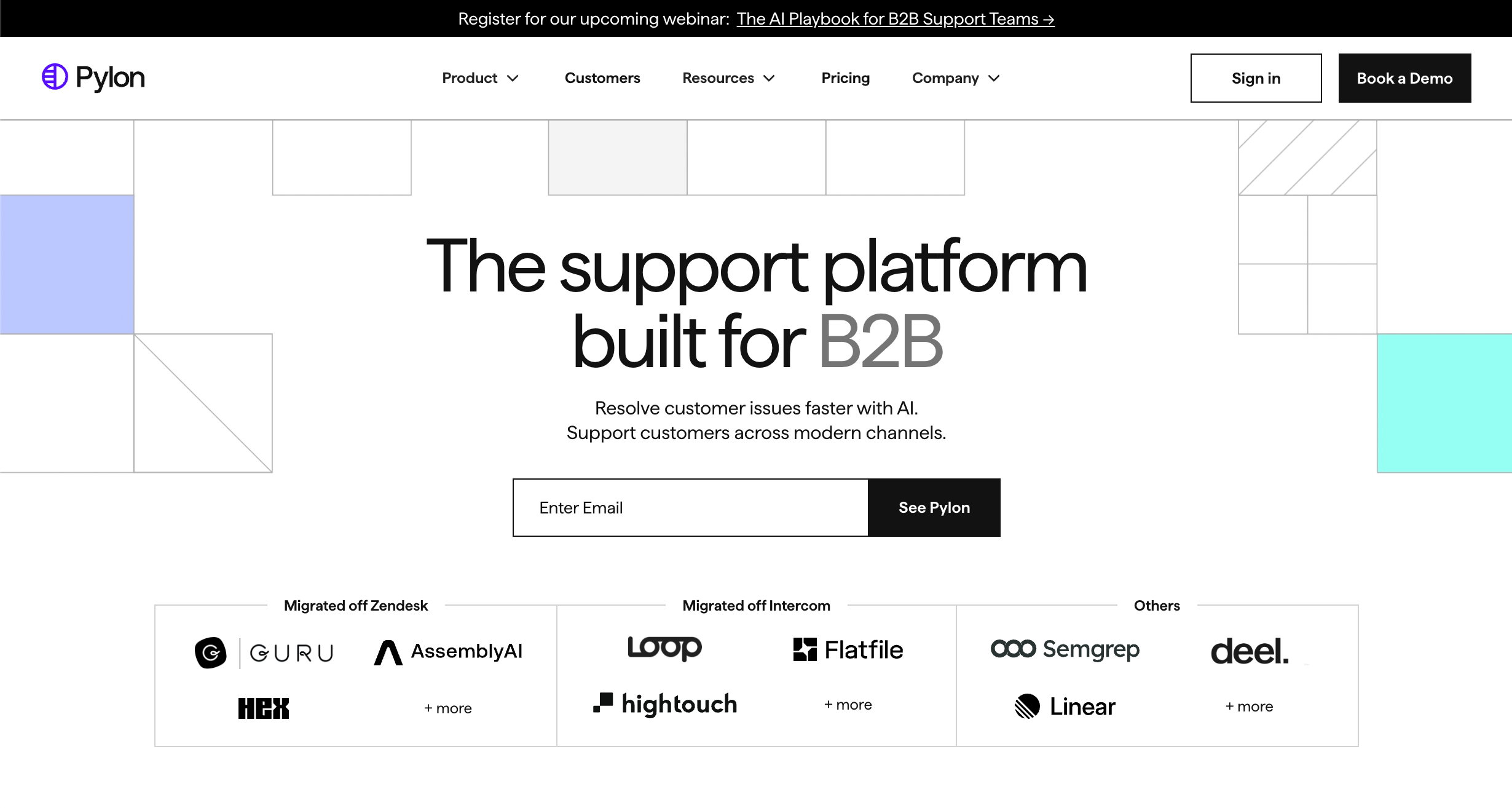
This is why Pylon directly targets Zendesk and Intercom. It’s not “mean”, it’s strategy.
As You Scale, Villains Disappear
Once you reach late-stage, almost nothing remains above you except legacy systems.
So your villain becomes generalized:
Inefficiency
Complexity
Manual work
Compliance risk
Rippling is the perfect case study of a high-quality and amazingly run late-stage startup.
Their marketing often doesn’t mention a single competitor besides the buried “Rippling vs (insert Legacy system here)” pages.
That’s because villain must be inefficiency itself, framed through credibility and competence.

This is the natural evolution.
A fun exercise: open the Wayback Machine and watch how every late-stage winner gradually shifts from “we’re better than X” to “we are the standard.”
The hard reality is that a great product doesn’t guarantee adoption.
You need distribution. If you want to grow, pick your villain and punch up.